Architecture
The Roltek architecture is designed to provide a secure, scalable, and flexible IoT infrastructure that supports diverse deployment scenarios — from small installations to large, multi-site enterprise environments.
The architecture follows a modular approach, allowing each layer to scale and operate independently.
High-Level Architecture
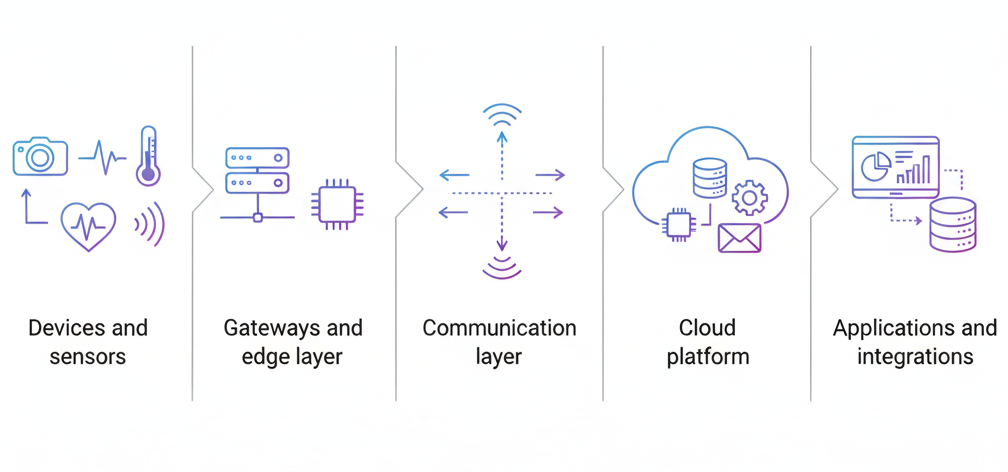
A typical Roltek deployment consists of the following layers:
- Devices & Sensors
- Gateways & Edge Layer
- Communication Layer
- Cloud Platform
- Applications & Integrations
Each layer plays a specific role in the data lifecycle.
Devices & Sensors Layer
This layer includes all field-level devices responsible for collecting data.
- Sensors, meters, controllers, and actuators
- Industrial and commercial-grade devices
- Support for various communication interfaces
Devices generate raw data and send it to the gateway or directly to the platform, depending on the deployment model.
Gateways & Edge Layer
Gateways act as a bridge between field devices and the cloud.
Key responsibilities include:
- Aggregating data from multiple devices
- Performing edge processing and filtering
- Managing local buffering during connectivity loss
- Ensuring secure data transmission
The edge layer enables reliable operation even in unstable network conditions.
Communication Layer
The communication layer ensures reliable and secure data transfer.
- Standard IoT protocols (MQTT, HTTP, etc.)
- Encrypted communication channels
- Configurable data transmission intervals
This layer abstracts network complexity from upper layers.
Cloud Platform Layer
The cloud layer is the core of the Roltek ecosystem.
- Device and data management
- Data storage and processing
- Alerting and rule engines
- User and access management
The platform is designed for high availability and horizontal scalability.
Applications & Integrations Layer
This layer provides access to data and insights.
- Web dashboards and visualizations
- APIs for external system integration
- Webhooks and event-based communication
- Reporting and data export
It enables seamless integration with enterprise systems.
Data Flow Overview
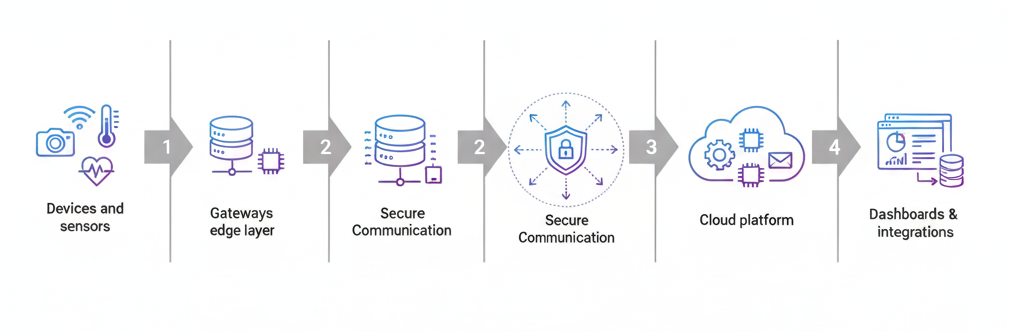
A typical data flow in the Roltek architecture follows these steps:
- Devices collect data from the field
- Data is sent to the gateway or directly to the cloud
- Edge processing and buffering (if enabled)
- Secure data transmission to the platform
- Data storage, processing, and visualization
- Alerts and integrations are triggered when conditions are met
Deployment Scenarios
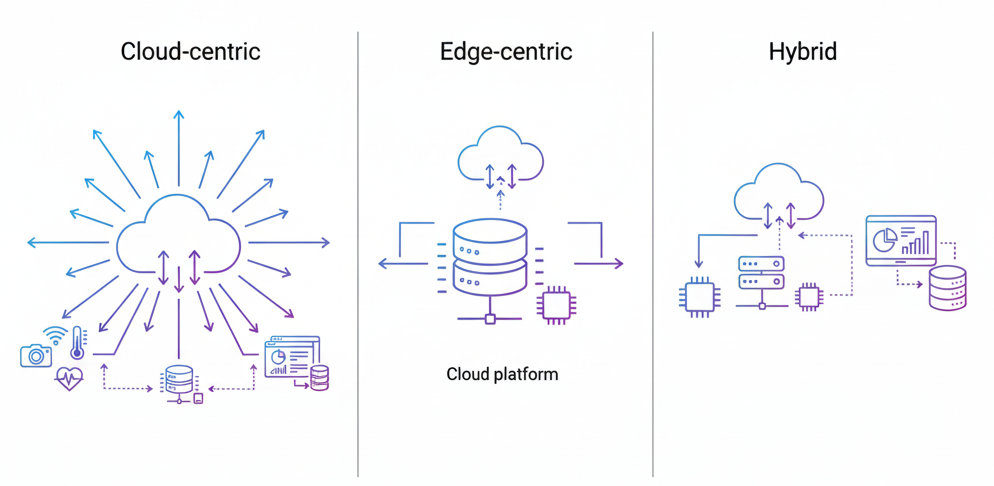
Roltek architecture supports multiple deployment scenarios:
-
Cloud-Centric
Devices communicate directly with the cloud platform. -
Edge-Centric
Gateways perform local processing and decision-making. -
Hybrid
Combination of cloud and edge processing.
Scalability & Reliability
The architecture is built to support:
- Large numbers of devices
- High data throughput
- Multi-site deployments
- Fault tolerance and redundancy
Each layer can scale independently to meet system demands.
Security by Design
Security is embedded into every architectural layer.
- Secure device identity and authentication
- Encrypted communication channels
- Controlled access between layers
- Data isolation and privacy protection
For more details, refer to the Security documentation.
Architecture Summary
The Roltek architecture provides a robust foundation for building reliable IoT solutions by combining edge intelligence, secure communication, and scalable cloud services.
What’s Next?
Continue with:
- Data & Communication – Protocols and data handling
- Security – Detailed security architecture
- Use Cases – Architecture in real-world scenarios
Understanding the architecture will help you design and deploy efficient IoT solutions with Roltek.